





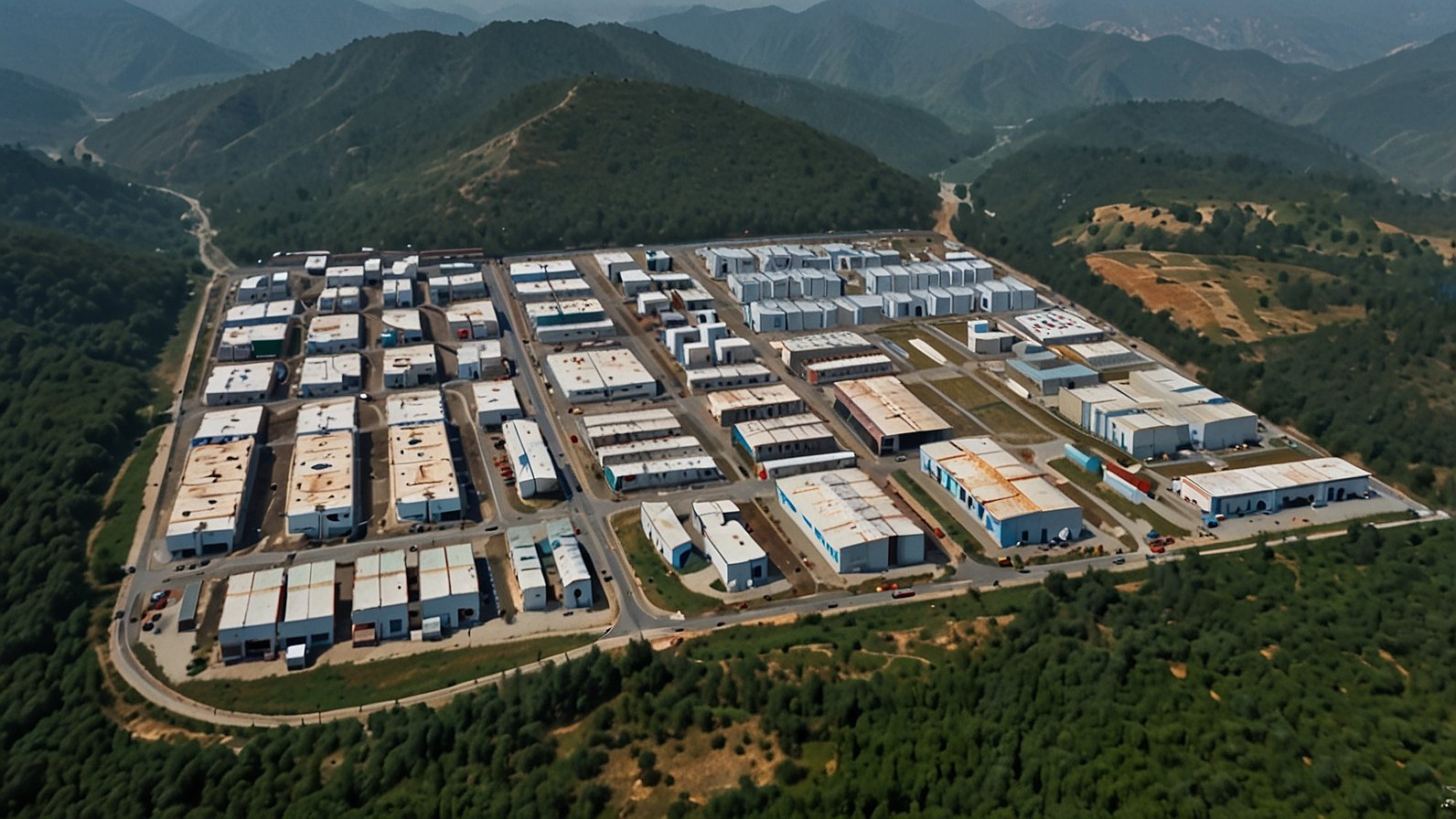
You might not find it on a typical tourist map, but if you’re holding a strip of aspirin, a bottle of cough syrup, or a packet of antibiotics made in India, there’s a very good chance it began its journey in a small town in Himachal Pradesh. Welcome to Baddi hub—a name that might be unfamiliar to the average person but rings like a giant gong in the corridors of Indian industry and pharmaceuticals. This isn’t just an industrial estate; it’s the nation’s undisputed capital for manufacturing, a magnet for global corporations, and an economic miracle story written in concrete and steel. So, what transformed this quiet region into an industrial titan? Let’s pull back the curtain.
From Serene Hills to Industrial Heartbeat: The Rise of the Baddi Hub
Think of a startup that skyrocketed to become a unicorn. That’s Baddi’s story, but on a geographic scale. Its transformation is a masterclass in perfect timing and strategic incentive.
For decades, industrial development in India was concentrated in a few big cities. But in the early 2000s, the government had a vision to spread growth and investment to the country’s beautiful but economically slower hill states. Himachal Pradesh rolled out the red carpet, offering incredibly attractive benefits for companies willing to set up shop. We’re talking major tax holidays, capital investment subsidies, and simplified regulations.
The business world took one look at the offer and rushed in. The location was already perfect—proximity to Chandigarh, a major urban center, and well-connected by road to the rest of North India. The serene hills of Baddi quickly began to buzz with the sound of construction and machinery, evolving from a sleepy town into the pulsating Baddi hub we know today.
Why Big Pharma (and Others) Chose Baddi: The Irresistible Pull
You don’t become a manufacturing hub by accident. Companies like Dr. Reddy’s Laboratories, Morepen Laboratories, and Abbott didn’t just pick Baddi out of a hat. They were drawn by a powerful combination of factors that made it the obvious choice.
- The Incentive Engine: The initial tax benefits were the primary catalyst. For a capital-intensive industry like pharma, saving on taxes for a decade meant massive reinvestment possibilities and higher profit margins.
- The Cluster Effect: Success breeds success. As big players moved in, an entire ecosystem developed around them. This includes:
- Specialized Suppliers: Companies providing raw materials (APIs – Active Pharmaceutical Ingredients), packaging, and labeling.
- Skilled Labor Pool: The area developed a trained workforce, from engineers and chemists to machine operators.
- Support Services: Logistics companies, compliance experts, and maintenance services all set up shop nearby, creating a one-stop-shop for manufacturing needs.
- Strategic Location: Sitting on the border of Himachal Pradesh and Haryana, it offers the best of both worlds: the industrial benefits of the hills and the connectivity of the plains.
The Baddi Advantage – Then vs. Now
| Feature | Then (Early 2000s) | Now (Present Day) |
|---|---|---|
| Primary Draw | Financial Incentives: Tax breaks & subsidies | Established Ecosystem: Full supply chain & skilled workforce |
| Key Industry | Pharmaceuticals leading the charge | Pharmaceuticals, FMCG, Automobiles, Plastics |
| Infrastructure | Developing roads & basic facilities | World-class infrastructure: Wide roads, reliable power, advanced logistics |
| Challenge | Attracting the first anchor companies | Sustainable growth and managing environmental impact |
More Than Just Medicines: The Diverse Industrial Tapestry
While the “Baddi hub” is synonymous with pharma, its appeal is much broader. The same advantages that drew drug manufacturers also attracted other industries looking for a cost-effective and efficient base.
- Fast-Moving Consumer Goods (FMCG): Giants like Dabur and Himalaya Herbals have massive plants here, producing everything from shampoos and toothpaste to herbal supplements.
- Automobile Components: The area is a significant supplier of parts to major automotive OEMs across the country.
- Plastics and Packaging: To support the pharma and FMCG giants, a robust packaging industry naturally flourished onsite.
This diversification is a key strength. It means the local economy isn’t reliant on a single sector, making the Baddi industrial hub more resilient to market fluctuations.
Navigating the Crossroads: Challenges and the Future of the Baddi Hub
No success story is without its hurdles. The explosive growth of Baddi came with growing pains, and addressing these is crucial for its future as a sustainable manufacturing hub.
- Environmental Pressures: High concentration of industry can strain local resources, particularly water, and requires sophisticated waste management, especially for pharmaceutical effluent.
- Infrastructure Strain: While much improved, the public infrastructure sometimes struggles to keep pace with the rapid private sector growth, leading to traffic and housing challenges.
- Beyond Tax Breaks: The initial tax benefits had a sunset clause. For Baddi to continue thriving, it must transition from being an “incentive-based” hub to an “efficiency and innovation-based” hub.
The future lies in embracing smarter, greener technologies. Think zero-liquid discharge plants, solar power adoption, and moving up the value chain from generic medicine manufacturing to complex, high-value research and production. The focus is shifting from quantity to quality and sustainability.
Your Next Steps: Engaging with the Powerhouse
Whether you’re a business owner, a student, or just a curious mind, the story of Baddi is a fascinating case study.
- For Entrepreneurs: If you’re in manufacturing, Baddi’s ecosystem offers unparalleled advantages. Research the current subsidy schemes and potential partnerships.
- For Job Seekers: It’s a hotbed of opportunity for engineers, pharmacists, supply chain managers, and quality assurance experts.
- For the Curious: Follow the business news. The evolution of Baddi is a live lesson in economics, policy, and industrial development.
The Baddi hub is more than just a location on a map; it’s a testament to what visionary policy and entrepreneurial spirit can achieve together. It’s the quiet engine room of India’s industrial might, and its story is still being written.
What’s your experience with the Baddi industrial belt? Are you part of a company that operates there? Share your thoughts and insights in the comments below!
You May Also Read: Prostavive Colibrim: A Natural Approach to Prostate Wellness
FAQs
Why is Baddi so popular for pharmaceuticals?
Baddi became popular primarily due to the tax incentives and subsidies offered by the Himachal Pradesh government in the early 2000s. This, combined with its strategic location and the subsequent development of a full pharmaceutical supply chain (a “cluster effect”), made it the ideal location for pharma companies to set up cost-effective manufacturing units.
Which are the major companies located in the Baddi hub?
The area hosts a plethora of Indian and multinational giants. Major names include Dr. Reddy’s Laboratories, Abbott, Morepen Labs, Dabur, Himalaya Herbals, Sun Pharma, Nestlé, and many more, across pharmaceuticals, FMCG, and auto components.
Are the tax benefits in Baddi still available?
The major central tax incentives (like excise duty exemption) for the region have largely expired. However, the state government still offers various other subsidies and support for new investments, particularly for those focusing on innovation, green technology, and creating employment.
What are the main challenges faced by the Baddi industrial area?
The key challenges include managing environmental impact, especially water pollution and waste management, dealing with infrastructure strain from rapid growth, and transitioning its identity from a tax-free haven to a center for high-quality, efficient, and sustainable manufacturing.
Is Baddi only for large corporations, or can SMEs set up there too?
While large corporations dominate the landscape, the rich ecosystem of suppliers, service providers, and contractors means there are immense opportunities for Small and Medium Enterprises (SMEs) to thrive as part of the supply chain for these larger units.
How has Baddi’s growth impacted the local community?
The growth has been a double-edged sword. It has created massive employment opportunities and economic prosperity for the region. However, it has also led to challenges like increased pollution, pressure on local resources, and changes to the local culture and landscape due to rapid industrialization and influx of people.
What is the difference between Baddi, Barotiwala, and Nalagarh?
These are three contiguous areas that together form the Baddi-Barotiwala-Nalagarh (BBN) industrial belt. Often, when people refer to the “Baddi hub,” they are referring to this entire industrial region, as the development and industries span across these three towns.New chat